Friday, July 20, 2007

Memed.

I've been "memed" or is it "tagged"? I'm not really up to sp33d with teh ling0. Thanks Anita; I make it a rule not to engage in this kind of thing. However...

So here are five things I love about Jesus:

1. He's Jesus.
2. I am not Jesus.
3. Er.
4. That's it.
5. Did I mention He's Jesus?
_________________
I tag Abdul bin Rachmann, quartermaster, Holy Martyrs of the Prophet, Queens branch, NY, NY; Jackson Alexander Piffle, Master Mason of the Shrine of Light Mistletoe, Lodge #66B, Norfolk, Virginia; and, last, and by all means least, Morgana de Morgana, Priestess of the Order of The White Stag (Druidic Rite of Hoth), c/o "Hazels Nails and Bouffant Salon", 32 Blue Plate Boulevard, Klinghofferburg, PA.

Friday posts.

I've been busy lately and have yet to recover my composure (?) thanks to Summorum Pontificum. What is there to say? We've all read the responses from bishops around the world, the bad, the good, the indifferent. I do not understand those who are silent, have spoken not a word, not even to acknowledge it's existence. What game are they playing? It cannot be that they hope to hide it's existence by saying nothing. Perhaps they are really not sure what to say; perhaps it is a form of intimidation; perhaps they are waiting to see what who gets away with what.

Well, here are my offerings for today.

Doncha feel the healing?


First video I found. Fantastic!

Roman Catholic Womenpriests respond to Los Angeles. Bridget Mary Meehan, spokesperson [:-)] for Roman Catholic Womenpriests, [wimmin, surely?] issued the following statement:

The Roman Catholic Womenpriests community offers prayers for the survivors of sexual abuse in Los Angeles. We stand in solidarity with the courageous survivors in their long journey to speak truth to power and to obtain justice in response to the violations they suffered and the subsequent cover-up of sexual abuse by the hierarchy of the church. [what kind of sexual abuse? Characterize the victims. Sex? Age? Why won't you tell the truth?]

This is a classic video.

We offer the church a gift of a renewed priesthood that is open, inclusive and accountable to the communities we serve. The present clerical structure of the Roman Catholic church needs to be transformed from a model of domination with powers reserved to clergy into an open, participatory model that honors the gifts of God in the people of God. The present gap between clergy and lay needs to be eliminated. We must move from an unaccountable top-down, hierarchical structure to a people-empowered discipleship of equals. We advocate a community model of ministry based on union with the people we serve. It is our conviction that a church community such as this would ensure that power is not abused, and our children would never again be put at risk of abuse by our priests, nor will misconduct on the part of priests be overlooked and/or covered up.

Third time I have posted this video. Do you think these wimmin are mentally-ill?

The goal of the Roman Catholic Womenpriests community is to bring about the full equality of women in the Roman Catholic Church [no, it is to destroy the sacerdotal priesthood, the sacraments, the Church, souls: you are evil and malign]. The mission of Roman Catholic Womenpriests North America is to spiritually prepare, ordain, and support women and men from all states of life, who are theologically qualified, who are committed to an inclusive model of Church, and who are called by the Holy Spirit and their communities to minister within the Roman Catholic Church

Worldwide, the RCWP community has over 50 ordained, and over 100 candidates in preparation. In North America, for example, Roman Catholic Womenpriests serve in inclusive parish communities such as Mary of Magdala in San Diego and the Spirit of Life Catholic Community of Justice and Joy in Massachusetts. There are also two communities in Philadelphia: The Sanctuary of Peace and the Community of St. Mary Magdalene. As priests, we serve in nursing homes, hospices, retreat centers and house churches. The Roman Catholic Womenpriests’ communities are reaching out to build bridges of reconciliation and healing to alienated, and traumatized Catholics as well as with many sisters and brothers who are interested in worshipping together in dynamic, renewed communities of faith.[Sick. They are going to parley homosexual abuse (is that a tautology?) into advancing their heretical, evil, evil, movement]

For 1200 years some popes, bishops and scholars accepted women's ordination as equal to men's. In the 10th century Bishop Atto of Vercelli wrote about the early church practice of ordaining women to preside over the churches because of the great need. In 1976 The Pontifical Biblical Commission concluded that there is no biblical reason to prohibit women's ordination. In the 21st century, women have reclaimed our ancient Catholic heritage of ministry as deacons, priests and bishops in a community of equals. Women as priests remind us that women are equal symbols of the holy and that the identity of priests should reflect the experiences and spiritual authority of women. The call for the full equality of women in the church, including the priesthood, is the voice of God in our time. [Delusional: "...is the voice of God..."]

Roman Catholic Womenpriests pray that healing will come to all who have suffered abuse in our church, and warmly welcome survivors of sexual abuse and their family members to join us in building together a renewed Roman Catholic Church rooted in Gospel equality and justice. We extend this invitation to all who have been impacted by this scandal in our church, as parishes and parishioners suffer the consequences of this behavior, and will bear the burden of this just settlement, we invite you to likewise work with us to rebuild our church into a community where the “Good News” is lived faithfully and justice and integrity are our cornerstones.[why won't they say this abuse was done by homosexuals? Why? I wonder...]


For more information about Roman Catholic Womenpriests, visit our website at www.romancatholicwomenpriests.org

Text from the dissenting blog, Journey to Vatican III.

He swerves into teh turth!

"Much fuss is being made over the rumor that the Tridentine Mass is allegedly going to be “restored.” If anything happens, and it probably will, the decision will have more to do with power and politics than Latin and liturgy.

"The issue is not Latin in the liturgy. Any priest can say the current Catholic liturgy in Latin. Nor is the issue the Tridentine or pre-Vatican II mass. Any priest, with the permission of his bishop, can say the Tridentine Latin mass.

"The real issue is the power of local bishop to decide whether the Tridentine mass will be said in his diocese. Right now, a local bishop has the power to approve or not approve the use of the Tridentine mass in his diocese. Under current practice, a priest or a group of people petition the bishop to allow them to use the Tridentine mass. He then investigates the situation and decides on pastoral grounds whether it is a good idea or not. Often he will require that the petitioners state that they accept the new liturgy and Vatican II as legitimate.

"Some bishops, especially in France, have said no because they judge that the petitioners reject the reforms of Vatican II and are divisive in their dioceses. If the pope issues a Motu proprio allowing the use of the Tridentine mass without the local bishop’s permission, he is basically saying that he does not trust the pastoral judgment of the bishops. Those who have been fighting the bishops over the Tridentine mass will celebrate this as a victory over the bishops.

"Some in the Vatican, including Benedict, hope that allowing free use of the Tridentine mass will make possible reunion with Society of St. Pius X, the schismatic group started by French Archbishop Marcel Lefebvre. The leaders of the group, however, have indicated that their rejection of Vatican II goes way beyond the vernacular liturgy.

"Some in the Vatican hope that greater use of the Tridentine mass will undermine support for the Lefebvrite leaders and bring some of the society’s members back into union with the Catholic Church.

"Rumors that the Tridentine Mass was giong to be made more easily available date back to the papacy of John Paul II. So far the bishops have been able to fight it off, but the record shows that when it is an issue of papal power versus episcopal power, the Vatican usually wins. Other than embarrassing the bishops and pastors who have opposed wider use of the Tridentine mass, the Motu proprio will probably have little effect since public opinion polls show overwhelming support for the new liturgy among Catholics."

Thomas J. Reese, S.J., from Journey to Vatican III, June 1st 2007. Warning, this blog is a dissenters blog.

Chris Ferrara's Friend, Thomas Woods.

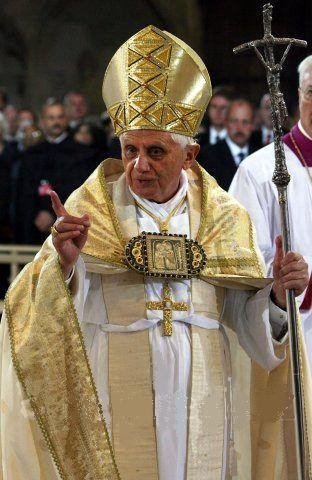
I cannot believe I have lived to see this. Pope Benedict XVI has just announced that effective September 14, any priest in the Roman Rite may offer Mass according to the Missal of 1962 (the most recent edition of the Church’s traditional rite) or the Missal of Paul VI (1970) in wide use today.

To non-Catholics I am sure it sounds all rather technical, but I assure you that with the publication of the Pope’s motu proprio Summorum Pontificum an event of staggering importance has just taken place in the Catholic Church. Although I’m in the midst of publicity work for 33 Questions About American History You’re Not Supposed to Ask, which was released just yesterday, I am delighted to set that aside in order to write what follows.

To make a long story short, in 1969–70 a new liturgy was introduced in the Roman Rite of the Catholic Church. Far from the minor changes that most bishops had thought they were approving at the Second Vatican Council, the Missal of Pope Paul VI was a sweeping and radical overhaul of the traditional Mass, which was in turn suppressed de facto (though not abolished de jure, as Benedict explains in the motu proprio). Nothing like it had ever been seen in the history of Catholic liturgy, as the man who later became Benedict XVI repeatedly protested.

Even before the new liturgy was fully introduced, the initial changes were enough to make novelist Evelyn Waugh refer to Mass-going as "a bitter trial." Father C. John McCloskey estimates that hundreds of thousands – I think even more – left the Church in the wake (and as a direct result) of the liturgical reform and its consequences.

Accompanying the new missal were profanations of various kinds. The Church’s extraordinary musical patrimony was abruptly discarded and replaced by a string of forgettable banalities. Church architecture suddenly became weirdly humanistic, with theater-in-the-round seating, denuded sanctuaries, the elimination of altar rails, and the like. Sanctuaries were literally bulldozed so the priest could "face the people" across the altar – despite ancient practice to the contrary, researchers discovered after it was too late.

Whether any of this had any necessary connection to the new missal or was merely an unfortunate byproduct is a contentious issue that cannot be sorted out here. The fact is that this frenzy of "de-sacralization" – to use Benedict’s term for it – compounded the disorientation that the new missal in and of itself would have produced.

When it seemed as if the old liturgy would never be heard from again, a group of European intellectuals, Catholic and non-Catholic alike, sent a petition to Pope Paul VI urging him not to suppress this venerable rite. The signatories, who included Agatha Christie, Graham Greene (no conservative he), and Malcolm Muggeridge, urged the Pontiff to reconsider. If the Vatican were suddenly to order the demolition of all of Europe’s great cathedrals, they said, it would be the intellectuals who would have to stand up and resist. But those great cathedrals had been built for the celebration of this beautiful rite that was itself in danger of suppression.

"The signatories of this appeal," the petition concluded, "which is entirely ecumenical and nonpolitical, have been drawn from every branch of modern culture in Europe and elsewhere. They wish to call to the attention of the Holy See the appalling responsibility it would incur in the history of the human spirit were it to refuse to allow the traditional Mass to survive, even though this survival took place side by side with other liturgical forms."

This, among other reasons, is why people have been driving hours at a time, or even relocating across the country, in order to attend one of the few traditional Masses that Pope John Paul II’s 1988 indult once again made available. Now, at long last, their sacrifices have borne fruit.

So no matter how many news reports misleadingly portray the issue as pitting those who favor "Mass in Latin" over those who prefer "Mass in English," the issue is not merely one of language. The Missal of Paul VI can just as easily be offered in Latin. It is a question of two different ways of saying Mass.

Although we have come to expect the mainstream media to get major stories wrong, the stories about the motu proprio and its aftermath are in a class of their own. Three-quarters of every article is devoted to interviewing the various strains of emotional hypochondriac who think the world is ending because people can worship the way they want.

If we had a media with the tiniest shred of intellectual honesty, or even just some normal human curiosity, we might have heard these naysayers asked questions like, "Why are we supposed to feel sorry for you, when these people are asking only that their favored liturgy be tolerated? Are you happy only when other people have their spiritual aspirations denied?" Instead, our liturgical vandals have been allowed to portray themselves as the victims here. We are the victims, we Catholics who lived through the series of experiments that people like this have been putting us through since the 1960s.

The fact is, Roman Rite Catholics all over the world could be found rejoicing after the release of these documents (the motu proprio itself and the explanatory letter to bishops that accompanied it). People actually held motu proprio parties at their homes, as indeed did we. Parishioners at church after church sang the Te Deum.

Not a word about any of this in a single mainstream report. Not one word. Instead, Catholics are said to be walking around moping that reverence and dignity might come back to their churches.

Now part of me sympathizes with those who say we should be magnanimous in victory, and not seek to score points against those with whom we have been at odds on liturgical issues in the past. Indeed most of me takes this eirenic view.

But I am convinced that this cannot be right. There is an essential lesson in what has just transpired, a lesson that must be properly absorbed even if it means ruffling a few feathers for one last time. The liturgical warfare of the past four decades has caused too much anguish for us simply to walk away in triumph and learn nothing from it.

For several decades, not only the Catholic left but also the "orthodox" Catholic right condemned supporters of the 1962 Missal as disobedient, wicked, schismatic – you name it – because they believed that what was beautiful and venerable yesterday could not cease to be beautiful and venerable today. They likewise found it hard to believe that they were considered a little bit crazy, perhaps even in need of counseling, because they longed for the traditional Mass, the very thing they had been taught their whole lives to venerate. They rightly refused to believe that being Catholic meant living in a scenario straight out of Orwell or Kafka.

Speaking of Orwell, the chaplain at a Catholic university I spoke at not long ago scolded a group of students who asked for the traditional Latin Mass on campus. The new Mass, he insisted, "is the traditional Mass." Since authority had decreed it, a brand new rite became ipso facto traditional. It is this kind of nonsense that Cardinal Ratzinger never accepted, and that as Pope Benedict he has buried once and for all.

There is no need to mention names – that would be uncharitable at a time like this, and in any event they (and we) know who they are.

The point is this: if it is right and good to honor the 1962 Missal now – as our critics, having been gently rebuked by the Pope, now concede – then it was right to do so 30 years ago as well, and it was wrong to scold people for it. And we love it now not because the Church’s highest authority has said it is to be loved (much as we genuinely appreciate that important statement) but because it is venerable in and of itself.

Catholicism becomes a contemptible caricature of itself when people are suddenly considered deranged for honoring in the evening the very things they had been told to honor that afternoon. The current pope, while still Cardinal Ratzinger, once observed that "the old rite should be granted much more generously to all those who desire it. It’s impossible to see what could be dangerous or unacceptable about that. A community is calling its very being into question when it suddenly declares that what until now was its holiest and highest possession is strictly forbidden and when it makes the longing for it seem downright indecent."

In 2001 Ratzinger told a liturgical conference at the Benedictine abbey of Fomtgonbault that "a venerable rite such as the Roman rite in use up to 1969 is a rite of the Church, it belongs to the Church, is one of the treasures of the Church, and ought therefore to be preserved in the Church." And "what was up until 1969 the Liturgy of the Church, for all of us the most holy thing there was, can not become after 1969…the most unacceptable thing."

Both themes come through in the letter to bishops that accompanied the motu proprio: "What earlier generations held as sacred, remains sacred and great for us too, and cannot be all of a sudden entirely forbidden or even considered harmful. It behooves all of us to preserve the riches which have developed in the Church’s faith and prayer, and to give them their proper place."

There is nothing sinister about what the Pope has done, ignorant news reports to the contrary notwithstanding. His liberation of the Church’s traditional liturgy is a matter of justice and simple common sense.

Many of us have accepted, with grim resignation, that over time the world is simply destined to get worse and worse: uglier, more vulgar, more perverse. And yet, in the midst of it all, we get an extraordinary development like this. A major aspect of life in the West, and around the world for that matter, is suddenly about to improve dramatically. It is truly astonishing.

Normally I’d have been a little upset when something broke at my house the other day. Instead, I said to myself, "Oh, well, we still have the motu proprio."

On few occasions in my life have I been so utterly overjoyed. Justice has truly prevailed. A great wound has been dressed by the Church’s chief physician.

July 11, 2007

The Fearmakers and their fear.

The wit and wisdom of Frank K. Flinn. Emphasis throughout in italics is mine.

________________________

Concilium Vaticanum IIum, vale!
By Frank K. Flinn July 10, 2007

CATHOLICS AROUND the world should now have no illusions. Pope Benedict XVI's recent decision to encourage wider use of the traditional Tridentine Mass in Latin is the latest move in his long campaign to undo liberal reforms in church practices popular with Catholics since the 1960s.

The move may well trigger liturgical schisms in dioceses throughout the world.

The form of the Mass was promulgated by Pope Paul V[sic] in the Roman Missal in 1570. In this rite the priest stands on an elevated altar, facing away from the people and mumbling the most sacred parts of the liturgy in Latin.

The Tridentine Mass lasted until the new form promulgated in 1969 by Pope Paul VI at Vatican Council II (1962-65). While drawing on some of the most ancient Christian forms of worship, the new Eucharist[sic] was translated into local languages. The priest now faced the congregation. Around the world liturgical music expanded to include gospel music, African chants and drumming, Mexican mariachi bands, folk music, and even pop rhythms. Immediately conservative Catholics attacked the new rite, but[!] Paul VI warned that the gospel would be lost to the modern world if it were not addressed to people in their language and their customs.

Criticism continued unabated by a traditionalist minority. In 1988 former French Archbishop Marcel LeFebvre led a small minority of Catholics into schism over what he and his followers labeled the heretical "Mass of Paul VI." The Lefebvrists not only rejected the new liturgy, they rejected key doctrines of Vatican II on ecumenism, religious liberty, and collegiality. Collegiality was the central ecclesiastical concept that shaped Vatican II. The depth of the traditionalists' hatred of Vatican II teachings was and remains astounding.

On the other edge[but not schism, he's implying "cutting edge"] of the church, progressives wanted to advance the openings begun at Vatican II, not only in the liturgy but also in ecumenism, lay involvement, Christian social action (liberation theology, feminism, ecology), and ethical theory (priestly celibacy, birth control). Paul VI started to apply the brakes, but Pope John Paul II and Cardinal Joseph Ratzinger, his new prefect for the Congregation for the Doctrine of the Faith , went in for a whole new brake job.

They set out to thwart the progressive side of the church. In the 1980s they silenced the liberation theologian Leonardo Boff, removed Swiss Hans Küng and American Charles Curran from their teaching posts, and unscrupulously oversaw the unlawful excommunication of the Indian Tissa Balasuriya. (That act was reversed.) Just this year the pope censured Salvadoran Jesuit liberation theologian Jon Sobrino by using the old Vatican tactic of stringing together quotations out of context. [Reversing after applying the brakes? Here is what was at stake, and some more. You can see in this what Frank likes about this priest's beliefs...if they are his beliefs. It doesn't matter what his beliefs are: what matters is what the CDF thought they were and the action to stamp his errors (if they were errors) out: a little weak though, the world environment is target rich too, why so little action?]

In contrast, the papacy remained inexplicably lenient toward the schismatic Lefebvrists despite the scorn they continued to heap in the direction of the Vatican itself. Indeed, in the 1980s Cardinal Ratzinger gave them free ammunition. In the preface to a liturgical treatise he accused modern Masses of being faddish "showpieces" and "fabrications." He went on to praise the Eastern Catholic and Orthodox Eucharist as exemplars of an "eternal liturgy." One can detect a Eurocentric prejudice in his remarks.

The pope has not been evenhanded in his dealings with the many branches of the Catholic church. He has simply capitulated to the Lefebvrists, who continue to look down contemptuously on average Catholic parishioners who like to worship in their own tongue and see their priest face-to-face. The appeal to an "eternal liturgy" is false. The liturgies of the earliest churches were both multiform and multilingual within the first generation going from Aramaic to Greek and Syriac in short order. The earliest known church, recently excavated at Megiddo in Israel, has the altar not elevated and apart but at the very center of the worshiping community. A true traditionalist would gladly embrace the many languages and cultures of the world as did the early church. [Eh? What happened to the evolving Church?]

Why do I say farewell to Vatican II? One of the roots of that council was the liturgical movement that preceded it by half a century. The liturgical reformers were convinced that the liturgy was of, by, and for the whole people of God, clergy, and lay alike. The very word liturgia in Greek means "the work of the people." [Yes, quite, your understanding excludes God and it condemns itself!] This notion embodies at its fullest the principle of collegiality, the key theological idea that shaped Vatican II. The Tridentine Mass is the work of the priest. By turning back the liturgical clock not to the creative multiplicity of the early Christian communities but to the heyday of the Inquisition and papal monarchism at Trent, Pope Benedict XVI is abandoning the principle of collegiality that embraces all bishops, all priests, all deacons, and all lay people as the worshiping community of the beloved faithful. That says to Vatican II, "Farewell!" [Indeed!]

Frank K. Flinn, adjunct professor of religious studies at Washington University in St. Louis, is author of "Encyclopedia of Catholicism."

From a non-Catholic.

You may want to read the "Fearmakers" post first.

____________________


I'm not Catholic so I'm not clear on just what a motu proprio is. I do know that you could probably produce a pretty decent, critically-acclaimed horror movie around the concept:

[Cue scary baritone voice] Motu Proprio. At Mass, no one can hear you scream.

considering the way it scares the living daylights out of some people. Like this guy:

"I can’t fight back the tears. This is the saddest moment in my life as a man, priest and bishop," Luca Brandolini, a member of the liturgy commission of the Italian bishops’ conference, told Rome daily La Repubblica in an interview on Sunday.

"It’s a day of mourning, not just for me but for the many people who worked for the Second Vatican Council. A reform for which many people worked, with great sacrifice and only inspired by the desire to renew the Church, has now been cancelled."

The Rev. John F. Baldovin , a professor of historical and liturgical theology at the Weston Jesuit School of Theology in Cambridge, Massachusetts thinks it'll bring out the nuts.

But I think this is the wrong way to go about redressing some of the mistakes of the last 40 years, and a lot of crazy people are now going to come out of the woodwork, people who are discontent with the way the church has gone for the last 40 years.

Seems to me that if you and the family start driving from St. Louis to Indianapolis to visit Grandma, the fact that your wife insists that you get off westbound Interstate 70 and turn around doesn't make her crazy. Father Thomas Reese of the Society of Jesus, an Episcopal a Catholic religious order, thinks the whole idea isn't Episcopalian enough:

Rumors that the Tridentine Mass was going to be made more easily available date back to the papacy of John Paul II. So far the bishops have been able to fight it off, but the record shows that when it is an issue of papal power versus episcopal power, the Vatican usually wins. Other than embarrassing the bishops and pastors who have opposed wider use of the Tridentine mass, the Motu proprio will probably have little effect since public opinion polls show overwhelming support for the new liturgy among Catholics.

Stupid popes. Thinking they know more than bishops do. Frank Flinn, adjunct professor of religious studies at Washington University, here in St. Louis, thinks Benedict is out to destroy The Most Important Event In Christian History.

"Catholics around the world should now have no illusions. Pope Benedict XVI’s recent decision to encourage wider use of the traditional Tridentine Mass in Latin is the latest move in his long campaign to undo liberal reforms in church practices popular with Catholics since the 1960s."

Not only that but the Pope wants to split the Catholic Church apart.

"The move may well trigger liturgical schisms in dioceses throughout the world."

I have no idea what a "liturgical schism" is. None whatsoever.

"The form of the Mass was promulgated by Pope Paul V[sic] in the Roman Missal in 1570. In this rite the priest stands on an elevated altar, facing away from the people and mumbling the most sacred parts of the liturgy in Latin."

[Cue scary baritone voice] WARNING: Exposure to spoken Latin may be too intense for young children.

"The Tridentine Mass lasted until the new form promulgated in 1969 by Pope Paul VI at Vatican Council II (1962-65). While drawing on some of the most ancient Christian forms of worship, the new Eucharist was translated into local languages. The priest now faced the congregation. Around the world liturgical music expanded to include gospel music, African chants and drumming, Mexican mariachi bands, folk music, and even pop rhythms. Immediately conservative Catholics attacked the new rite, but Paul VI warned that the gospel would be lost to the modern world if it were not addressed to people in their language and their customs. "

Flinn? When I was still Episcopalian